
Data Engineering Platforms That Turn Raw Data into Real-Time Action
Stop managing data in spreadsheets and disconnected systems. We build platforms that unify your data, empower your team, and drive smarter decisions at scale.
The problem
Why Data Engineering Platforms Matter Now
Your organisation is drowning in data. Sales data lives in one system. Customer data in another. Operations data in spreadsheets. Analytics requests take weeks because data engineers spend 70% of their time just preparing data instead of creating insights.
85%
of analytics projects fail because data infrastructure isn't built right.
32%
of cloud budget is wasted on inefficient data platforms.
15–25%
of annual revenue is lost by companies due to poor data quality and fragmented infrastructure.
67%
of organisations struggle with disconnected data sources, leading to operational inefficiencies and delayed decision-making.
Our Capabilities
From siloed sources to insight-driven growth
Data Integration and Data Ingestion
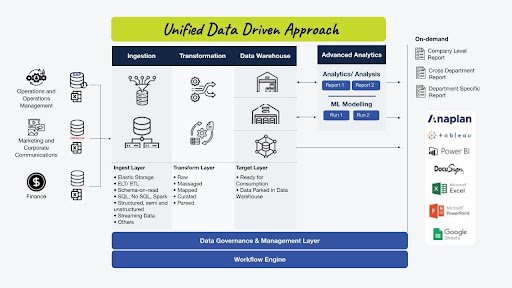
Our Data Governance begins by identifying every siloed source to perform precise Data Extraction. It includes data cleansing, massaging, applying business logic, aggregating, and summarising the data to meet business insight requirements using automated pipelines. We use automated protocols to capture your information before moving into our Data Curation phase.
Architecting High-Performance Repositories
Once transformed, your data is loaded into a custom Data Lake, Data Warehouse, or Data Lakehouse built by our world-class team of Data Engineers and Data Scientists. This serves as a centralised repository designed specifically for your organisation's needs. We mobilise this information into a visualisation framework, enabling your teams to draw real-time insights from your transformed data.
Fueling Insight-Driven Growth with Advanced Analytics
A custom-built Data Engineering Platform enables your organisation to flourish through better-informed decisions. We enable Sales, Marketing, Operations, and Finance teams to track the entire consumer journey while empowering Product teams with behavioural insights. By optimising your Data Models, we improve quality to enable predictive analytics and perform complex queries that anticipate market shifts.
Architecture options
What Kind of Data Platform We Can Build
The right architecture depends on your business goals, data volumes, and operational requirements. Here are the most common data platform architectures we design and build for our clients.
Data Integration and Data Ingestion
Data cleaning, massaging, aggregating & summarising to meet business requirements using automated pipelines.
Modern Data Warehouse
Structured data for reporting, dashboards, and business intelligence.
Data Lake
Stores large volumes of structured and unstructured data.
Data Lakehouse
Combines the flexibility of a data lake with the performance and governance of a data warehouse. This is becoming the preferred modern architecture.
Real-Time Data Platform
We help you build processes and analyse data as it's generated for real-time analysis.
Streaming Data Pipelines
We create data pipelines that continuously move data between systems with minimal delay.
Data platform architected
for your specific load
Every business generates, stores, and uses data differently. Instead of forcing your workloads into a generic architecture, we design a data platform around your operational requirements, data volume, performance expectations, and future AI ambitions. Whether you're processing millions of transactions, consolidating reports from multiple systems, or preparing for predictive analytics, your platform is built to scale with you, not against you.
- Built around your data volume and workload patterns
- Supports batch, streaming, or hybrid data pipelines
- Scales as your business grows
- Designed for analytics, reporting, and AI readiness
- Optimised for performance, reliability, and cost
Simplified Data Transformation. Superior Performance.
- Unified Data Foundation
- Automated Data Pipelines
- High-Performance Architecture
- AI-Ready Data Foundations
- Compliance, Governance & Security
Related Case Studies
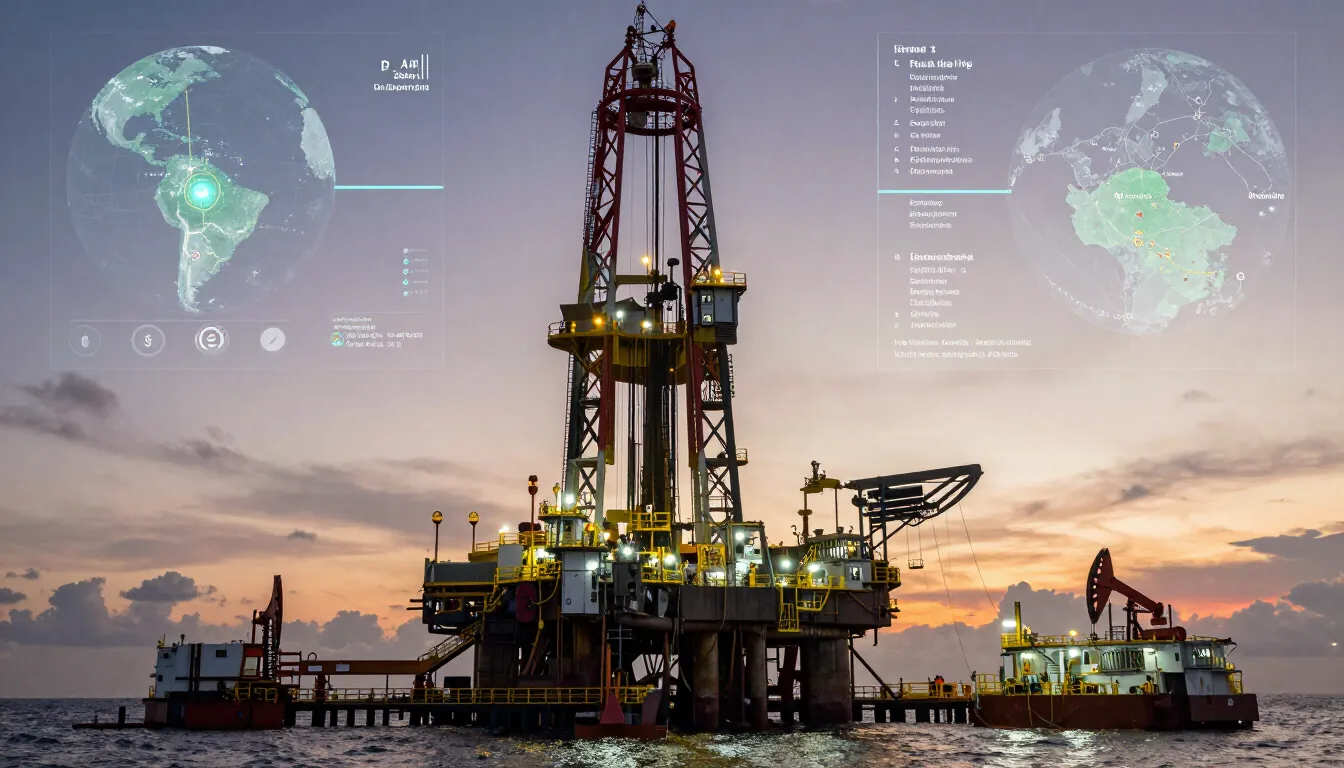
Building Data Platform & Pipeline Automation for Oil and Gas
Automating 152 data transformation processes cut well evaluation from two weeks to 15 minutes.
Building Data Platform & Pipeline Automation for Oil and Gas
Automating 152 data transformation processes cut well evaluation from two weeks to 15 minutes.
Related Blogs

Enterprise-Grade Data Platforms for AI Operations Without Enterprise Bloat
In Malaysia, 73% of organisations report that their AI initiatives stall due to poor data infrastructure, not a lack of models. Meanwhile, 64% of Malaysian enterprises overspend on platform licenses for features they never use.
Data Platforms 101: The Building Blocks Behind Smarter Decisions
A guide to building modern data platforms: ingestion, storage, processing, analytics, and governance. Every successful business runs on decisions — good decisions backed by data.

Why Data Engineering Has Become Over-Complicated (And How to Fix It)
Most Malaysian organisations we engage with don’t need another whiteboard session filled with buzzwords. They need a data pipeline that flows, a dashboard people use daily, and insights that empower decisions today.

Cloud-Native Data Platforms: Transform Legacy to Modern Systems in Malaysia
Built for Malaysian Enterprises | Powered by Open-Source | Delivered In-Country by Nimbus. Cloud data platforms unify fragmented systems — see how Malaysian enterprises eliminated silos, cut reporting time in half, and scaled faster.

Is Your Data Architecture AI-Ready? Why Most Systems Fail Before They Start
Your company wants to implement artificial intelligence. Your board asks about machine learning capabilities. Your competitors are talking about AI-driven insights. So you hire data engineers, buy expensive tools, and start building. Then six months in, the project stalls.
Enterprise-Grade Data Platforms for AI Operations Without Enterprise Bloat
In Malaysia, 73% of organisations report that their AI initiatives stall due to poor data infrastructure, not a lack of models. Meanwhile, 64% of Malaysian enterprises overspend on platform licenses for features they never use.
Data Platforms 101: The Building Blocks Behind Smarter Decisions
A guide to building modern data platforms: ingestion, storage, processing, analytics, and governance. Every successful business runs on decisions — good decisions backed by data.
Why Data Engineering Has Become Over-Complicated (And How to Fix It)
Most Malaysian organisations we engage with don’t need another whiteboard session filled with buzzwords. They need a data pipeline that flows, a dashboard people use daily, and insights that empower decisions today.
Cloud-Native Data Platforms: Transform Legacy to Modern Systems in Malaysia
Built for Malaysian Enterprises | Powered by Open-Source | Delivered In-Country by Nimbus. Cloud data platforms unify fragmented systems — see how Malaysian enterprises eliminated silos, cut reporting time in half, and scaled faster.
Is Your Data Architecture AI-Ready? Why Most Systems Fail Before They Start
Your company wants to implement artificial intelligence. Your board asks about machine learning capabilities. Your competitors are talking about AI-driven insights. So you hire data engineers, buy expensive tools, and start building. Then six months in, the project stalls.
Our Efforts Have Helped These Businesses









Ready to optimise your cloud? Stop guessing your requirements
Start with a free assessment and a 30-day trial. Keep whatever we build together.
No lock-in. Honest recommendations only.
Frequently asked
How long does it take to implement a data platform?
It depends on your complexity, such as the variety and volume of data. Cloud-native platforms typically take 1–3 months. Hybrid or legacy integration takes 3–6 months. We've deployed fully managed platforms in 3–4 months. The timeline includes discovery, design, build, testing, and knowledge transfer.
What if we don't have a data engineering team?
That's exactly why our Managed Data Platform option exists. We host, build, maintain, and operate the entire platform for you. Your team uses it without needing deep data engineering expertise.
Will we be locked into your platform?
No. We use standard, open-source technologies. You own your data. You own your architecture. You can switch providers anytime. Our approach is to build platforms you control, not vendor lock-in solutions.
Can you integrate my ERP, CRM, and operational systems?
Yes. We build data integration pipelines that connect your ERP (SAP, Oracle, NetSuite), CRM (Salesforce, HubSpot), and operational systems into a unified data platform. We handle complex data transformations, real-time synchronisation, and API integrations without disrupting your current operations. Our data engineering team manages schema mapping, error handling, and incremental (change data capture) updates automatically.
Can you support real-time analytics?
Absolutely. We build real-time data engineering platforms using streaming technologies that process events instantly. Our real-time analytics enables instant decision-making, detects fraud immediately, responds to customer behaviour in real time, and optimises inventory in real time. Real-time setup typically takes 8–12 weeks, including testing and optimisation.
Can you build a data mesh?
Yes. Data mesh is a decentralised data architecture where individual teams own their data domains. We help you implement data mesh by designing federated data architectures, establishing domain boundaries, creating self-service data platforms, and implementing governance frameworks. We work with your teams to establish data ownership, build domain data platforms, and create shared governance standards.
Can you build a data fabric?
Yes. We build data fabric infrastructure that automatically discovers data, applies consistent governance, enables self-service analytics, and maintains data quality across all sources. We implement the architecture, governance policies, and self-service tools. Implementation typically takes 3–4 months for mid-market enterprises, enabling business analysts to access any data instantly without IT involvement.