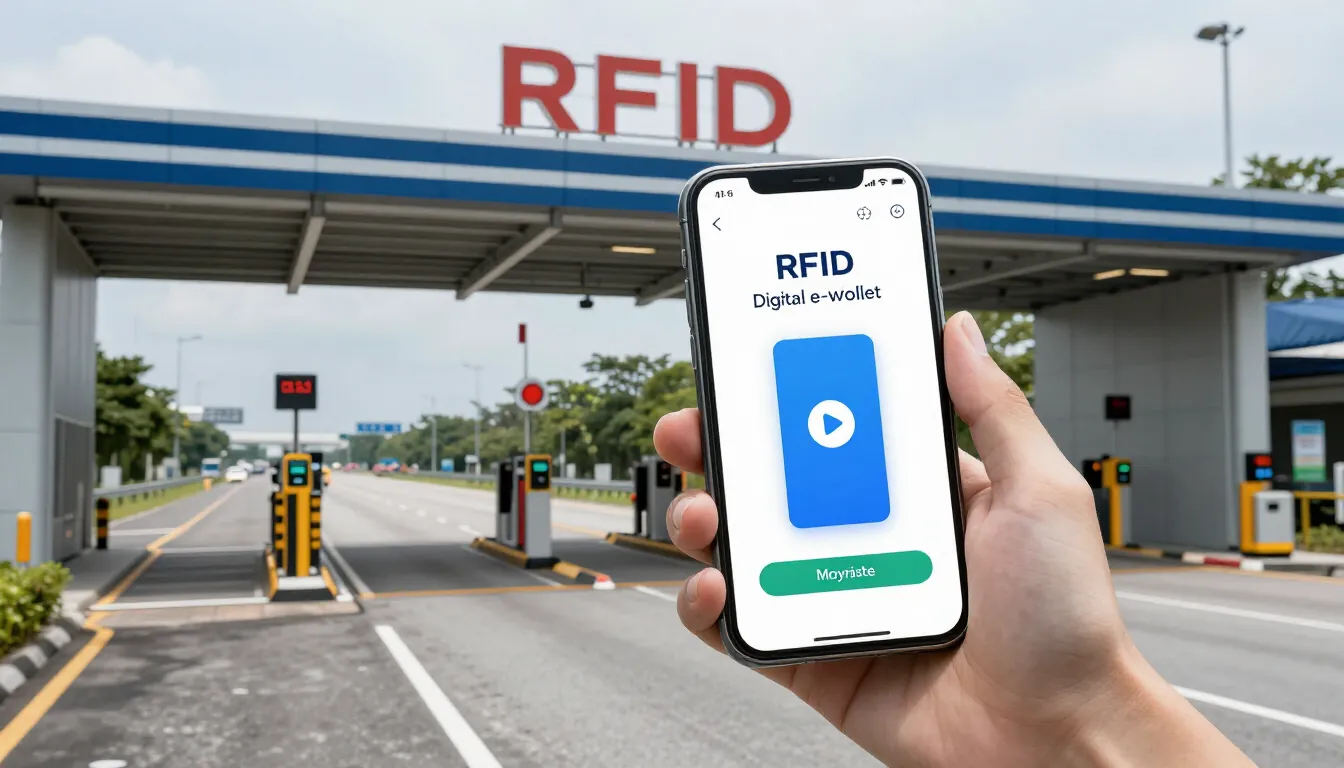
The client is a leading digital payments provider in Malaysia. They were building two products in parallel: an RFID-based toll payment system to replace the old, bulky contactless devices drivers had used for years, and a digital e-wallet to let users pay directly through a mobile app. Both were meant to launch fast. Their infrastructure had other plans.
The Problem
Infrastructure That Couldn't Keep Up With the Roadmap
The client's on-premise systems were already running their existing legacy payment platform, with little capacity left for new development. That left two options.
Build new servers in-house, which meant new hardware, new hires, and an estimated 3 to 6 months before development could even start. Or find a cloud partner that could support two new products immediately, without the wait. For a fintech racing to launch before a competitor did, 3 to 6 months wasn't a delay. It was a market opportunity handed to someone else.
The Solution
A Cloud Partnership Built for Mission-Critical, Fast-Moving Development
The client issued a request for proposal and landed on Nimbus. What set Nimbus apart wasn't just the ability to spin up infrastructure fast, it was the combination of technical agility, transparent pricing, and real experience supporting secure, mission-critical workloads, exactly what a payments company can't compromise on.
A Scalable Cloud IaaS Environment Built Around Two Development Teams
Nimbus delivered an open-source Infrastructure-as-a-Service environment tailored specifically to support the RFID and e-wallet builds, working directly with the client's internal IT and development teams throughout.
- Custom virtual environments: Built for rapid deployment, with secure, isolated testing environments and strong network segmentation.
- Security and compliance built in: Enforced access policies and infrastructure standards were maintained without slowing development down.
- A bridge between IT and product teams: Nimbus translated infrastructure requirements into a platform the development team could actually build on, instead of leaving each side to negotiate separately.
- Elastic scaling: Resources scaled with development needs, with none of the constraints of physical hardware.
The result: development started within days, not months, and both teams could focus on the product instead of the plumbing underneath it.
The Results
Two Products, Built and Tested in a Fraction of the Time
- Development began within days instead of the 3 to 6 months an in-house build would have required.
- The RFID toll payment system was built and tested, offering a lower-cost, sticker-based alternative to the old contactless device.
- The e-wallet system launched alongside it, letting users link payment cards to a mobile app for digital transactions.
- No proprietary licensing costs, thanks to an open-source infrastructure approach.
- A long-term infrastructure plan followed once the products reached full-scale deployment.
What Building In-House Would Have Cost
Had the client gone the in-house route, they'd have faced 3 to 6 months of setup before development even began, significant capital spent on hardware and additional IT headcount, and a scaling problem in both directions, expensive to grow, wasteful to shrink. Their internal IT team would have spent that time managing servers instead of managing the products that were supposed to generate revenue.
Building a product that needs infrastructure to move as fast as you do? If your development roadmap is being held back by procurement timelines or on-premise capacity, that's usually an infrastructure problem, not a product problem. Nimbus can help you find out how fast you could actually be moving.